
More families are turning to this food pantry. Here's how it serves them with dignity
Bloom Township Food Pantry serves 1,000-1,200 households a month after new SNAP work rules cut benefits for thousands of Illinoisans.
Three Big Ideas
- More families are turning to the Bloom Township Food Pantry as new SNAP rules tightened amid rising prices
- Instead of handing out a pre-packed box, the pantry lets clients choose their own groceries from a menu — a model Director Susana Long says preserves dignity even as demand grows.
- Pantry staff also help clients apply for or manage SNAP benefits
Susana Long is the director of the Bloom Township Food Pantry, and she’s noticed something troubling lately: More people visiting to support their households.
“We’re seeing an increase of clients,” Long said. “It’s showing on our end, and people are worried. It’s a heartbreaking job, because you want to help as many people as possible and seeing the need grow, it’s tough.”
There are a host of reasons, including new Supplemental Nutrition Assistance Program, or SNAP, work requirements that took effect in February. State officials estimate as many as 400,000 Illinoisans have lost benefits since the cutoff took hold May 1. Food pantry staff across the region also say they're also seeing more families who don't qualify for SNAP turning to them because of recent cost-of-living squeezes— though most pantries, including Bloom Township's, don't formally track clients' SNAP status.
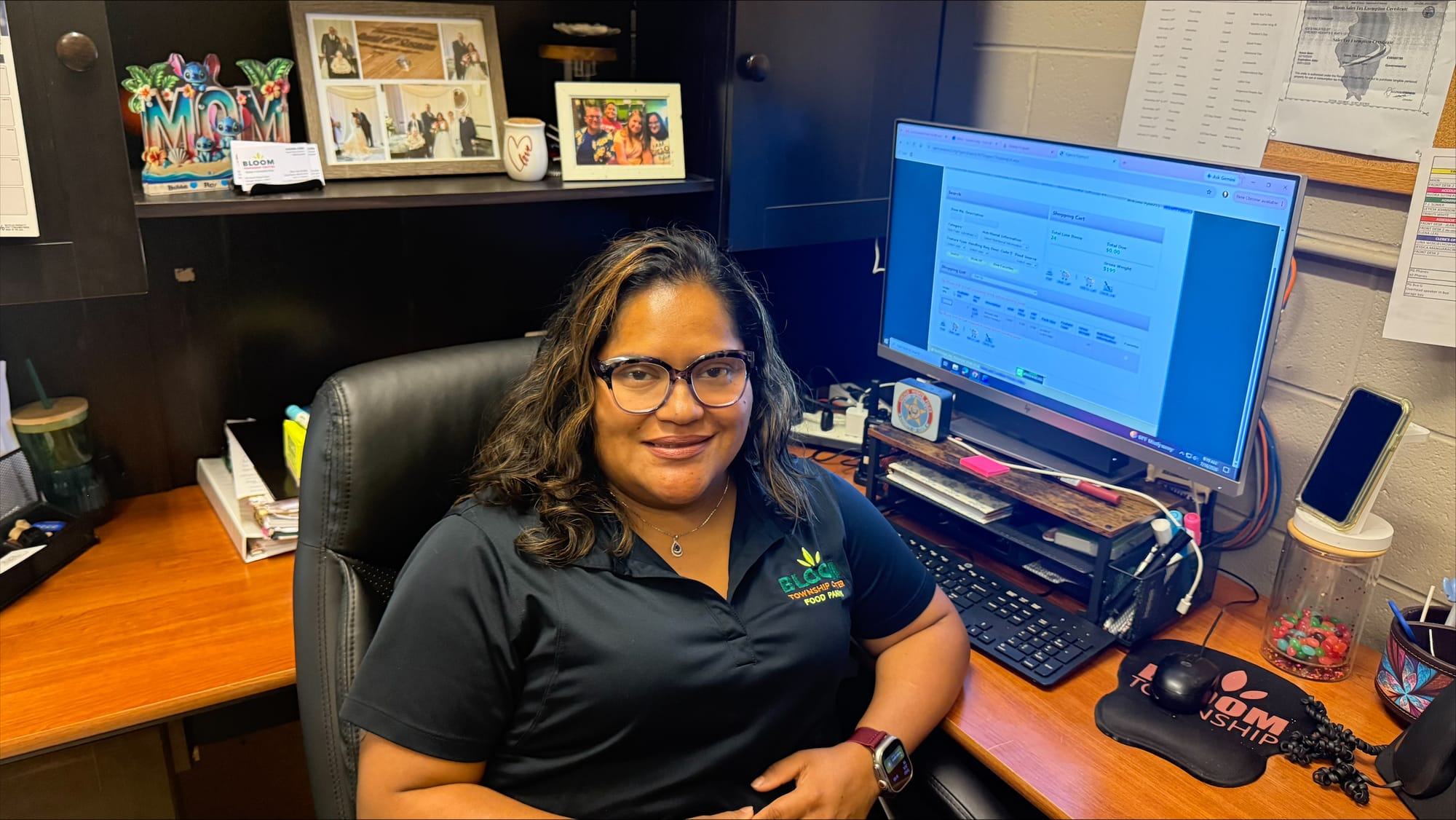
Bloom Township’s pantry, celebrating its 10th anniversary this July, now serves 1,000 — 1,200 households per month. Long, who became the director five years ago during the pandemic, said it was the only time the food pantry stopped doing menu choice, due to the risk of exposure.
Like many safety net services, Bloom’s pantry offers a host of solutions for people who need help. For example, they can help families apply for SNAP, recertify or log work hours that are now required under the new federal guidelines.
It also offers vegetables, meat and shelf-stable staples that come in part from the Greater Chicago Food Depository.
But what sets them apart is the way they distribute donations.
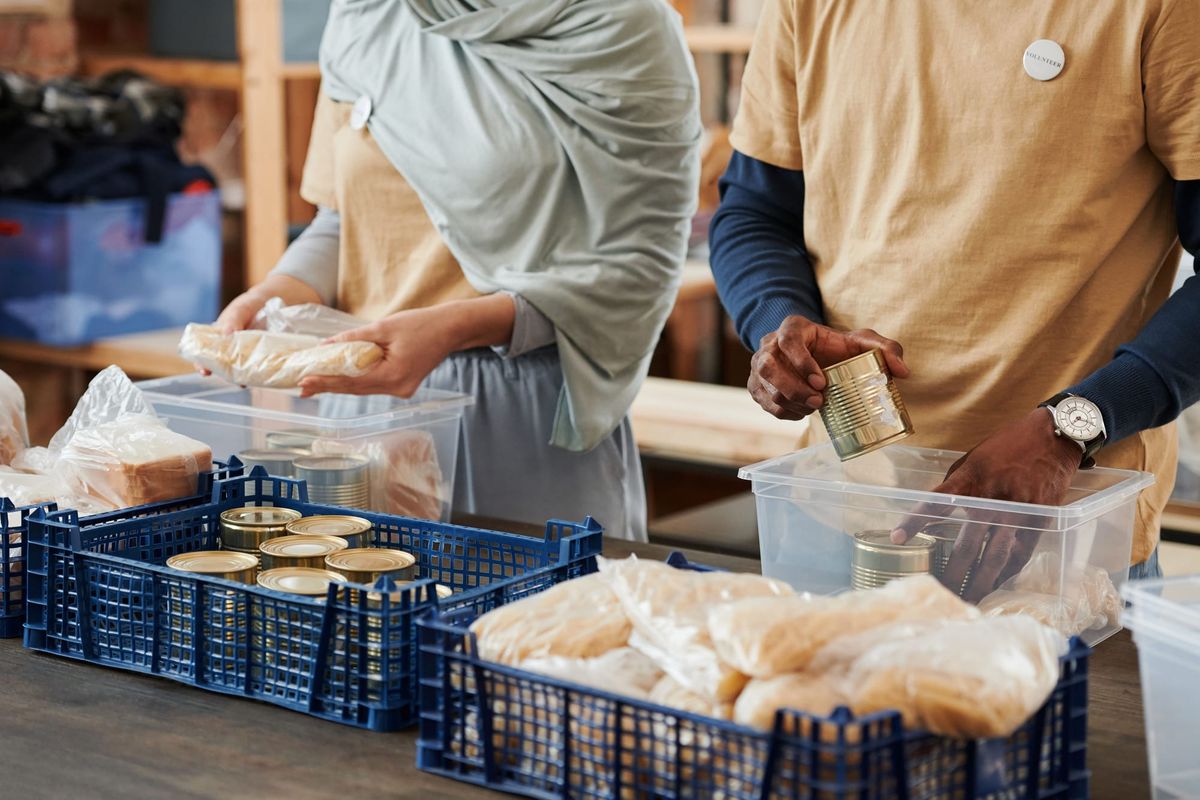
Most pantries hand people a bag or box of groceries and produce that have been selected for them. But at the township, the client provides a little information: their name, address and household size. They are then given a menu and a redeemable pantry card and then choose the items they want to take home. Volunteers pack up the food, and load them into the client’s vehicle.
Bloom Township supervisor T.J. Somer acknowledged the need for food assistance in southeast Cook County. That’s why he’s a big backer of Long and the work she and her volunteers do, because he has seen the evolution first hand.
A decade ago, he said, the food pantry was “maybe helping 100 or 200 people a month. We created a 501(c)(3). We’ve created a wonderful partnership with the Greater Chicago Food Depository.”
That’s grown to the number of households served per month and distribution of between 7,000 and 9,000 pounds of food per week.
“If you are hungry on any given day, walk into the general assistance office at the township center,” Somer said. “We’ll make sure you leave with the ability to get food.”
But what if someone doesn’t have a place to live? Somer said the township will assist in that area as well, to help them find shelter.
“If they say they don’t have a home and they want easier food items, we shop for them,” Long added. “We don’t turn anyone away. We want to make sure everyone is served – pop-lid cans or dry items that are easy to eat so no one goes hungry.”
The Bloom Township Food Pantry is open 3 to 7 p.m. Monday and 10 a.m. to 2 p.m. Wednesday. It is located at 425 S. Halsted St. in Chicago Heights. Call 708-543-2555 for more information.