Residents, not insurance, might be footing the bill for storm recovery
Whether because of claim denials or delays from the volume of work the storms brought, residents all around Cook County still struggle to get reimbursed by their insurance companies.
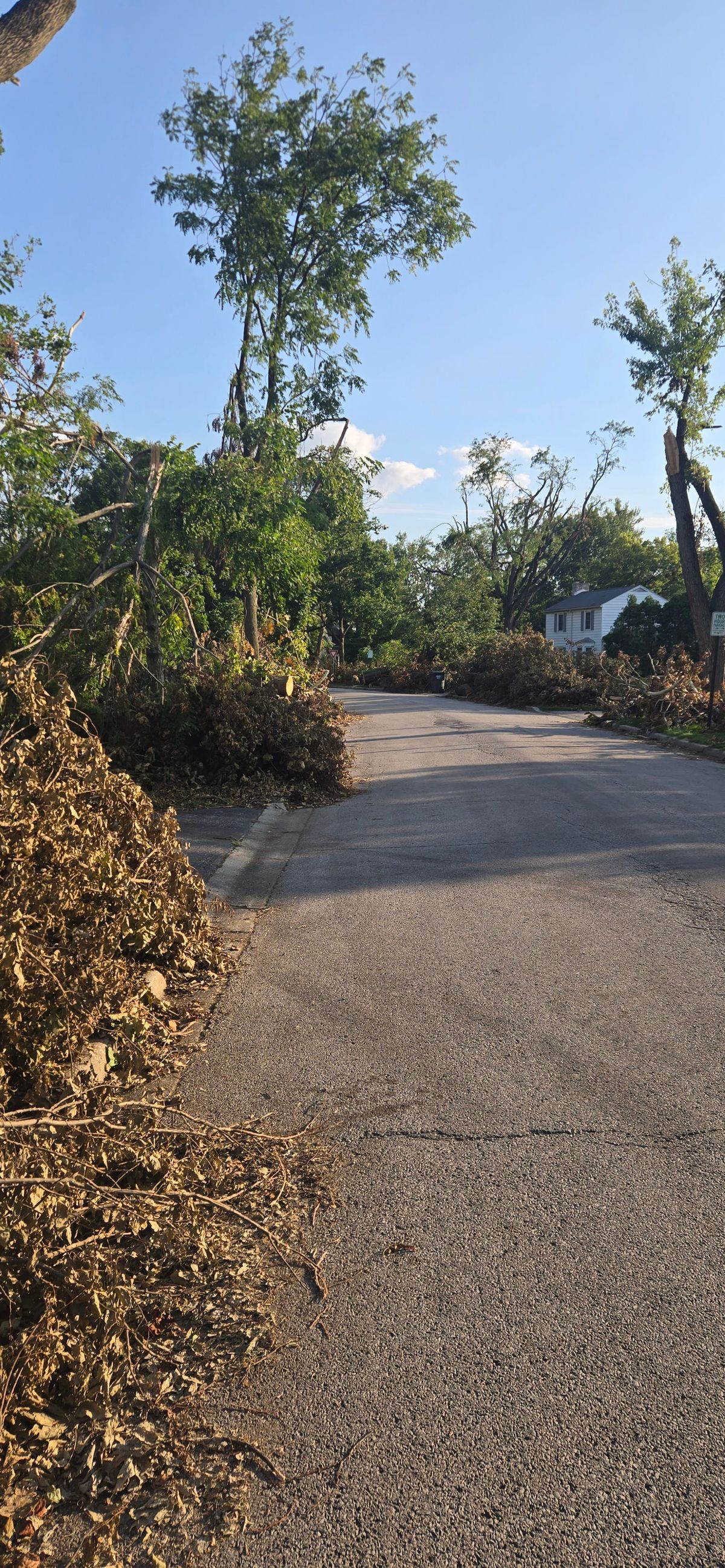
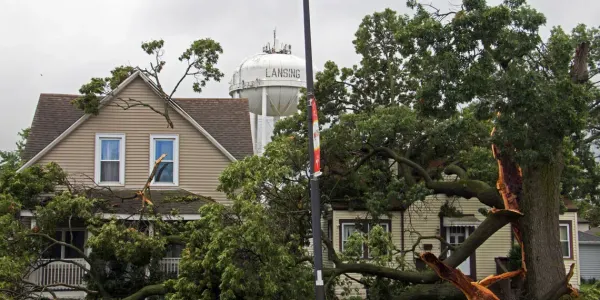
Edward Jones lives with his daughter, Dontrice Jones, and her family in Lansing. When August storms drove a tornado through their village, Edward was home alone and went into the basement as it destroyed their home.
“The bedroom is gone,” he said. “My grandkid’s bedroom is gone. My daughter and her husband’s bedroom is gone.”
The chaos of trying to rebuild their entire lives and repurchase everything once in their home was, as Dontrice put it, “a doozy.”
“My dad didn’t even have socks,” she said. “My baby didn’t even have school clothes.”
Dontrice said they had homeowner’s insurance, but remained unable to file a claim because they told her that they didn’t know she had a sump pump.
“We pay you all this time and all this money, and they find the littlest thing,” she said.
Patricia and Steve Triplett, 47-year residents of Glenwood, were still trying to get an insurance agent on the phone in late August.
The storms warped their storm door, ripped downspouts clean off their tri-level house and cracked a window — sending water into their den and flooding the crawlspace. It molded.
Yet the couple spent hours calling their insurance company. Steve said he sat on hold, listening to “all our agents are busy, please stay on the line.”
Whether because of claim denials or delays from the volume of work the storms brought, residents all around Cook County still struggle to get reimbursed by their insurance companies.
It’s hard to understand why — insurance is a complex business. And August’s storms — and Illinois weather in general — complicated things further. According to State Farm, the state’s largest provider, Illinois had more home and auto catastrophe claims through July than any other state, with more than 96,000 catastrophe weather-related claims.
State Farm also paid $799 million for storm-related losses in July. In 2025, it paid $457 million in hail claims alone.
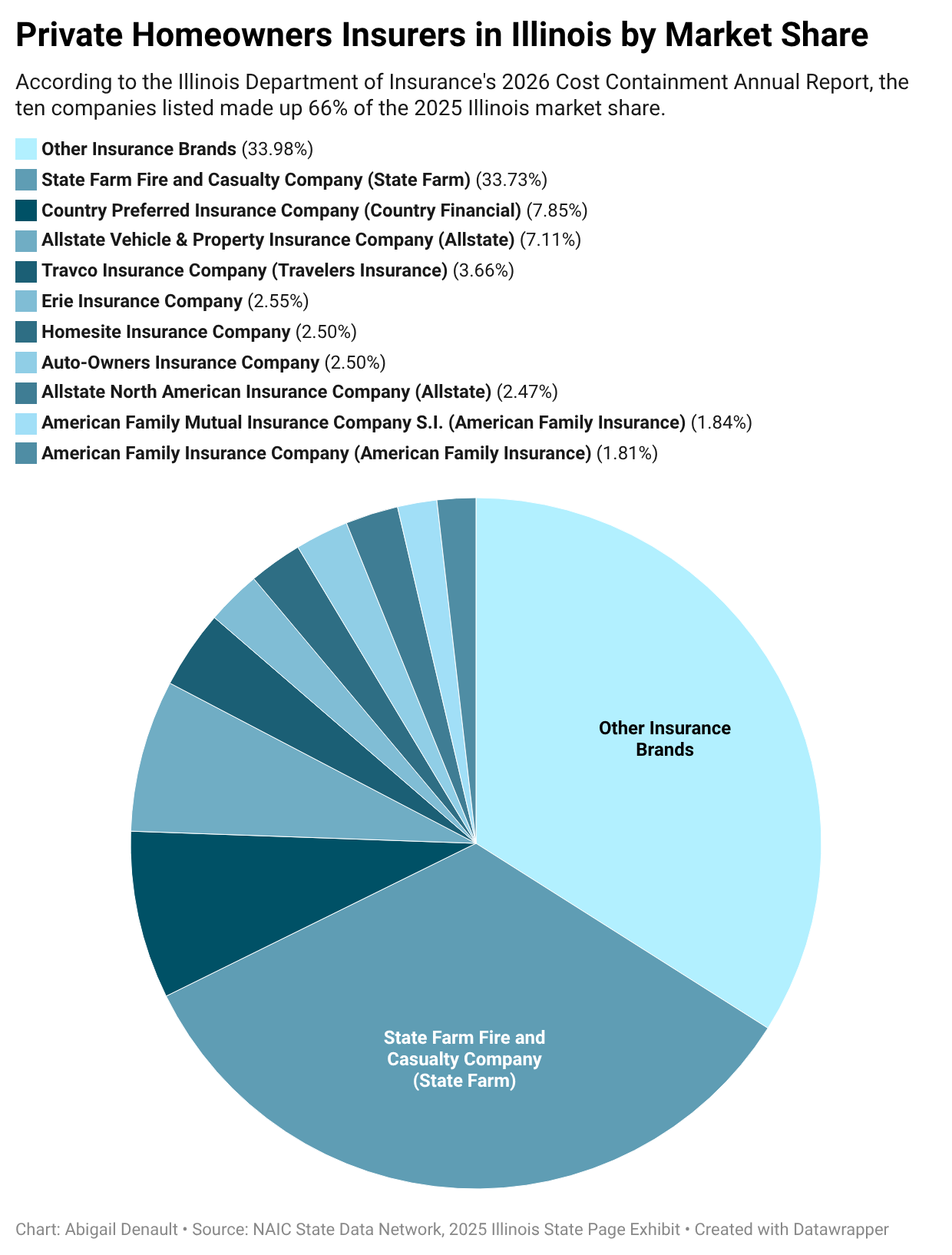
Still, claims do get denied and there are many reasons why, no matter how dutifully you pay your premiums.
According to a 2024 analysis of National Association of Insurance Commissioners data by Weiss Ratings, 47.5% of damage claims were denied in 2023 by the largest insurers and 37.4% of all insurers.
Standard insurance policies, according to NerdWallet, do not cover things like mold when it is a result of bad seals on windows or doors, a broken leaky faucet, ventilation issues, “sump pump failure, water or sewer line backup,” or “flooding.” Instead, homeowners might need to add endorsements such as sump pump or water backup coverage or flood insurance. Endorsements are changes or additions to a policy.
Insurance companies also list what they cover — or don’t — but that information may be hard to find.
Here’s an example from State Farm’s website:
Roof Damage
- Typically covered: wind, hail, fire, and lightning. This includes roof damage from a downed tree.
- Not typically covered: wear and tear, rot, deterioration, and workmanship (improper installation/repairs).
Water Damage
- Typically covered: losses caused by an abrupt release of water from a pipe inside the home, frozen/burst pipe if reasonable care is used to maintain heat in the home, water backing-up through a sewer or drain (with back-up of sewer or rrain endorsement) and water damage to your home caused by ice dams.
- Not typically covered: losses caused by flood, subsurface water, surface water, water backing-up through a sewer or drain (without endorsement), tidal water, tsunami, overflow of a body of water, spray from any of these whether driven by wind or not, frozen and burst pipes if reasonable care to maintain the heat did not occur.
An endorsement can make or break a claim for storm-related damage.
Even if a claim is denied, there are still options, and it might be worth it to try to appeal a negative decision.
An analysis by ValuePenguin of 2024 NAIC data found that 26.2% of complaints resulted in the company's position being overturned and 26.1% of cases resulted in compromised settlements or resolutions for the consumer.
What to do when a claim is denied:
The information is based on Illinois law and information from stormadvocate.org and Louis Law Group.
- Get an official reason for denial.
- According to Illinois law, insurers are required to name the specific policy provision behind a denial and not use vauge language.
- Understand your denial.
- Find the reason cited in the denial and compare it to your policy
- Common reasons: Policy doesn’t include that coverage, policy had lapsed, late reporting, inaccurate application information, insufficient claim evidence, covered event caused your loss
- Find the reason cited in the denial and compare it to your policy
- Document everything.
- Document as much as possible regarding your claim: photos of damage, receipts, estimates, your denial letter, your complete letter and all correspondence with the insurance company.
- Get a second opinion.
- File an appeal with the insurance company
- Keep the documentation.
- File a complaint with the Illinois Department of Insurance if the internal appeal fails
- You can call our Consumer Assistance line at (866) 445-5364, where Insurance analysts can answer general questions, but any formal consumer complaints must be submitted in writing.
- File:
- Online at https://idoihelpcenter.illinois.gov/s/
- Emailed to DOI.complaints@illinois.gov
- Mailed to 320 W. Washington Street, Springfield, IL 62767
- Fax at (217) 558-2083
- For a printed copy of the Department's complaint form, contact them at (866) 445-5364.
- The insurer will have 21 days to respond to the complaint, which will then be reviewed for the following outcomes, according to the IDOI:
- If the complaint is resolved, the complaint will be closed, and a letter will be sent to you.
- If an insurance law has been violated, the department will request corrective action.
- If the company is not abiding by the policy, the department will request corrective action.
- If the insurer or producer has not responded to all questions or has not investigated the complaint thoroughly, the department will require them to do so.
- If no violation of Illinois insurance law is found, a letter will be sent to you with an explanation of the finding and notice that the investigation is being closed.
- In each instance, you will receive a written response from the Department explaining the results of our investigation.
- For cases of bad faith or breach of contract, take legal action
- Worried about time? Illinois state law states the filing deadline is paused from the time of submitting proof of loss until the denial letter is sent.